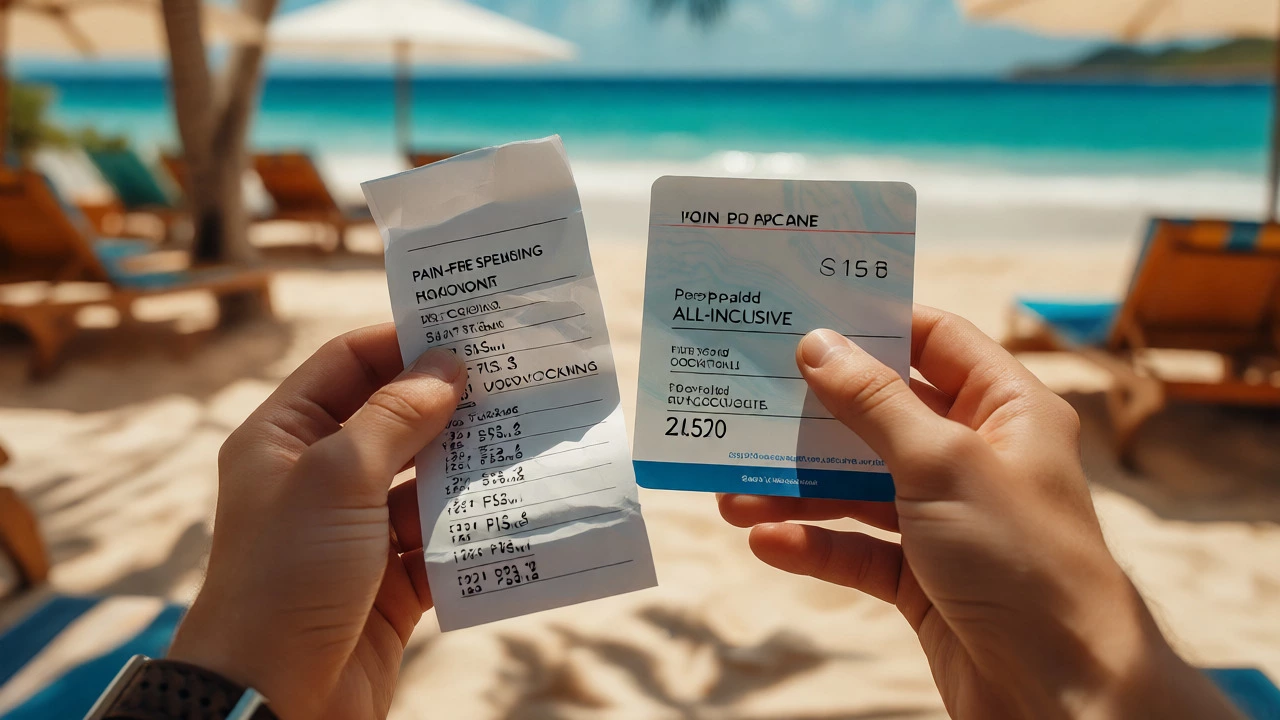
All-Inclusive vs. Pay-As-You-Go Cost Calculator
Enter your trip details below to see which option saves you money based on your spending habits.
Option A: All-Inclusive Package
Option B: Standard Hotel + Spending
Estimated Daily Spending Per Person:
| Expense Category | All-Inclusive | Pay-As-You-Go |
|---|---|---|
| Accommodation | $0 | $0 |
| Food & Drinks | $0 | $0 |
| Activities/Other | $0 | $0 |
| Total Estimated Cost | $0 | $0 |
💡 Pro Tip from the Article:
If you plan to spend more than $100/day per person on food and alcohol outside the resort, the All-Inclusive option usually wins due to "pain-free spending" prevention. If you are a city-breaker who explores local markets, pay-as-you-go is often cheaper.
You stare at two flight options for your trip to Mexico. One is a bare-bones ticket for $400. The other is an all-inclusive package for $1,200 that covers food, drinks, and activities. Your gut says the first option saves money. But then you remember last year’s trip where you spent $800 just on overpriced hotel cocktails and mediocre buffet meals. So, who wins? Does bundling everything actually save cash, or are you paying a premium for convenience?
The answer isn't a simple yes or no. It depends entirely on how you travel, what you eat, and where you go. For some people, all-inclusive resorts are a financial trap. For others, they’re the only way to stick to a budget. Let’s break down the math so you can decide if pre-paying for paradise makes sense for your next getaway.
The Hidden Costs of "Cheap" Flights
When you book a standard hotel room, you’re buying a bed and a shower. Everything else is extra. This model looks cheaper upfront, but it creates a dangerous spending environment. You walk into a resort bar and see a beer for $12. You buy one. Then another. By day three, you’ve spent more on alcohol than the difference between the cheap room and the all-inclusive rate.
This is called "pain-free spending." When you pay as you go, each transaction feels small. But these small transactions add up fast. A family of four might spend $50-$70 per meal at a tourist-trap restaurant near a beach resort. That’s $200-$300 a day just for dinner. Multiply that by seven days, and you’ve blown $1,400 before you’ve even bought a souvenir.
All-inclusive resorts flip this script. You pay once, usually at the time of booking. This locks in your cost. Psychologically, you stop worrying about the bill. You relax. And because you’ve already paid, you’re less likely to impulse-buy expensive extras unless you really want them.
Who Saves Money with All-Inclusive?
All-inclusive deals shine when you plan to stay on-site. If you’re the type of traveler who wants to lounge by the pool, swim, eat three meals a day, and sip margaritas without checking your bank balance, you will likely win. The key metric here is utilization. Are you going to use the amenities you’re paying for?
Consider a couple staying at a mid-range resort in Punta Cana. The all-inclusive rate is $300 per night. They eat breakfast, lunch, and dinner at the resort (value: ~$90). They drink four alcoholic beverages a day (value: ~$40). They use the gym, spa access, and evening entertainment (value: ~$20). Total daily value received: $150. Wait, that’s still less than the $300 cost. Where’s the savings?
The savings come from the alternative. If they stayed in a $150 room, they’d still need to feed themselves. Eating out in tourist zones often costs more than home cooking. Plus, they’d pay for transport to get to restaurants. When you factor in taxi fares, tips, and the inevitable snack runs, the $150 room often ends up costing $250+ per day in real-world spending. The all-inclusive caps that variable spending.

When All-Inclusive Becomes a Waste of Money
If you’re a foodie who wants to explore local street markets, or a city-breaker who plans to be out exploring museums until 10 PM, all-inclusive is probably a bad deal. You’re paying for buffets you’ll miss and bars you won’t visit.
Here’s a common scenario: You book an all-inclusive in Cancun. You arrive, check in, and immediately leave to find authentic tacos in downtown Cancun. You do this every day. You barely touch the resort’s $150-per-night dining credit. You’re essentially renting a luxury hotel room at a premium price because you didn’t use the included services.
Also, watch out for "premium" upsells. Many all-inclusives have tiers. The base rate includes domestic beer and house wine. If you want imported liquor, top-shelf spirits, or à la carte dinners at specialty restaurants, you’ll pay extra. These fees can erase any savings quickly. Always read the fine print on what’s actually included.
| Expense Category | All-Inclusive Package | Pay-As-You-Go Hotel |
|---|---|---|
| Accommodation (7 nights) | $2,100 (Included) | $1,050 ($150/night) |
| Breakfast | $0 | $175 ($25/day avg) |
| Lunch | $0 | $210 ($30/day avg) |
| Dinner | $0 | $350 ($50/day avg) |
| Drinks/Snacks | $0 | $280 ($40/day avg) |
| Tips/Service Charges | $0 (Usually incl.) | $100 |
| Total Estimated Cost | $2,100 | $2,165 |
This table assumes moderate spending. Notice how close the totals are. The all-inclusive wins slightly, but mostly because it prevents overspending. If you ate at cheap local spots, the pay-as-you-go model would be significantly cheaper.
Key Factors That Tip the Scale
To decide which route is cheaper for you, ask these questions:
- Do you drink alcohol? If you enjoy two or more cocktails a day, all-inclusive almost always pays off. Alcohol margins at resorts are huge; they charge $15 for a drink that costs them $2 to make. Getting that for "free" is great value.
- Are you traveling with kids? Kids eat a lot and demand constant entertainment. All-inclusive resorts often offer free kids' clubs and kids-eat-free promotions. This can save hundreds of dollars compared to paying for babysitters and children’s meals separately.
- Is the destination safe for walking? In places like Jamaica or parts of Mexico, leaving the resort can feel risky or require expensive taxis. If you’re confined to the resort area, you’re more likely to use the amenities, making the package worthwhile.
- What’s the exchange rate? If you’re traveling from the US to Europe, and the Euro is strong, eating out becomes very expensive. Locking in your food costs in USD via an all-inclusive package protects you from currency fluctuations.

How to Spot a Good Deal vs. a Gimmick
Not all all-inclusive resorts are created equal. Some are massive factories serving frozen chicken nuggets. Others are boutique experiences with chef-curated menus. To ensure you’re getting actual value, look for these signs:
First, check the review sites specifically for food quality. Search for terms like "buffet quality," "wait times," and "drink selection." If reviews say the food is repetitive or the lines are long, you might end up ordering room service-which often costs extra-defeating the purpose.
Second, look for "adults-only" properties if you don’t have kids. These tend to have better food and quieter atmospheres, meaning you’re more likely to sit down and actually enjoy the included meals rather than rushing through them.
Third, consider the location. An all-inclusive in a remote island destination (like the Maldives or Caribbean) is usually a better value than one in a major city (like Miami or Barcelona). In cities, there are endless affordable dining options nearby, so being tied to a resort buffet is a disadvantage. In remote areas, you have no choice but to eat there, so the package is essential.
The Verdict: Do the Math Before You Book
So, is it cheaper to go all-inclusive? For the average family or couple looking for a relaxing beach vacation where they intend to unwind, yes. It provides peace of mind and caps unexpected expenses. The psychological benefit of not carrying a wallet around is worth the slight premium alone.
However, if you’re a solo backpacker, a food enthusiast, or someone who plans to spend 80% of their time off-property, skip the all-inclusive. You’ll get more authentic experiences and lower costs by exploring local eateries and using public transport.
Before you click "book," grab a calculator. Estimate your daily food and drink budget. Compare it to the difference in room rates. If the all-inclusive upgrade costs less than your estimated daily spending, buy it. If it costs more, keep your flexibility and pay as you go.
Do I still need to tip staff at all-inclusive resorts?
It depends on the resort. Many modern chains include service charges in the upfront price, stating "no tipping required." However, tipping is still appreciated for exceptional service, especially for bartenders, bellhops, and housekeeping. Check the specific policy of your chosen resort, but budgeting $20-$50 total for the week for small gratuities is a safe bet to ensure excellent service.
Are flights included in all-inclusive packages?
Typically, no. The term "all-inclusive" refers to accommodations, food, drinks, and on-site activities. Airfare is usually sold separately or bundled as part of a broader "vacation package" from travel agents. Be careful reading the fine print: a "package" might include flights + hotel, while an "all-inclusive resort" strictly means the hotel amenities. Always verify what the quoted price covers.
Can I eat off-resort if I book all-inclusive?
Yes, you can always leave the resort to eat elsewhere. However, you lose the value of the included meals. Some high-end resorts offer "credit" systems where unused meal credits can be applied toward off-site excursions or spa treatments, but this is rare. Most travelers find that if they’re eating off-site, they should have booked a standard room instead to save money.
Is all-inclusive better for families with young children?
Generally, yes. Children’s appetites are unpredictable, and finding kid-friendly restaurants abroad can be stressful and expensive. All-inclusive resorts often provide supervised kids' clubs, shallow pools, and familiar food options (like pizza and pasta) at no extra cost. This allows parents to relax while ensuring their children are fed and entertained, offering significant logistical and financial benefits.
What are the hidden costs in all-inclusive holidays?
Common hidden costs include premium alcohol brands, à la carte specialty restaurants (which may require reservations and fees), spa treatments, water sports equipment rentals, airport transfers, and excursion tours. Always assume that anything labeled "premium," "imported," or "exclusive" costs extra. Read the inclusion list carefully before booking to avoid surprise bills.
Menu