Interactive Day Name Explorer
Select a Day
Click on any day to reveal its celestial origin and mythological roots.
Sunday
The Day of the SunEnglish (Germanic)
Norse/Germanic GodsSunnandæg
Old English Root
Deity: Sol
The Sun was considered the most powerful celestial body, governing life, growth, and visibility. In Germanic tradition, often personified as a goddess.
Latin/Romance
Roman Gods/PlanetsDies Solis
Literal Translation
- French: Dimanche (Lord's Day)
- Spanish: Domingo (Lord's Day)
- Italian: Domenica
Planet/God: Sun
The central star of our solar system. While Romance languages often shifted Sunday to Christian terminology (Lord's Day), the planetary root remains evident in the sequence.
It sounds like a simple trivia question, but the answer to what are the 7 days' names reveals a fascinating collision of astronomy, mythology, and ancient timekeeping. You might think we named the days randomly or just because they sounded nice. In reality, every single day of the week is tied to a celestial body visible to the naked eye. When you plan your next city break or schedule a weekend getaway, you are using a naming system that has survived for over two thousand years.
This isn't just about memorizing Monday through Sunday. It’s about understanding how our ancestors looked up at the night sky and decided that these seven wandering lights-the planets-were important enough to structure their entire lives around them. Let’s unpack the history behind the names you use every single week.
The Seven Wandering Stars
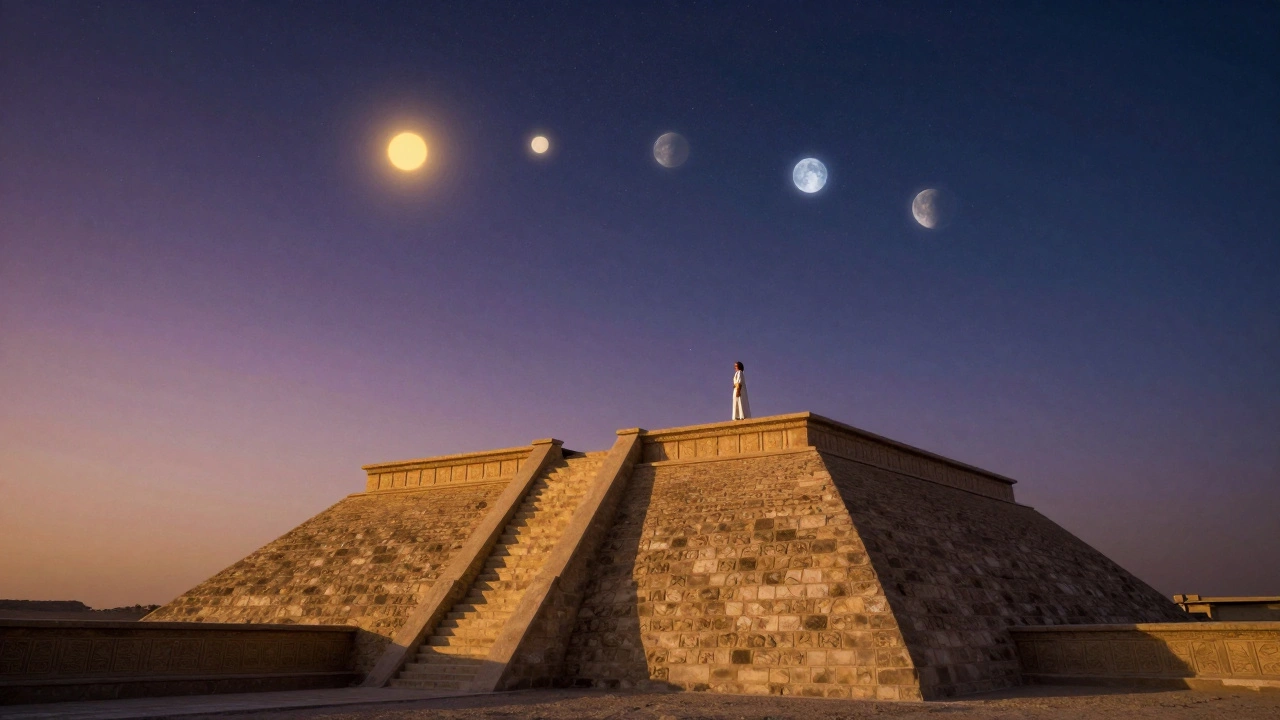
To understand why we have seven days, you first need to understand what the ancients saw when they looked up. They didn't see satellites or galaxies. They saw five specific objects that moved differently than the fixed stars. These were called "planets," from the Greek word planetes, meaning "wanderer." Combined with the Sun and the Moon, that made seven significant celestial bodies.
The Babylonians, who were some of the earliest advanced astronomers, noticed that these seven bodies dominated the sky. They also observed that the moon went through its phases in roughly 28 days, which divides neatly into four weeks of seven days. This mathematical harmony stuck. The concept spread from Mesopotamia to Greece, then to Rome, where it became the standard way to track time. By the time Christianity spread across Europe, this seven-day cycle was already deeply embedded in culture, even though religious traditions later tried to overlay their own meanings onto it.
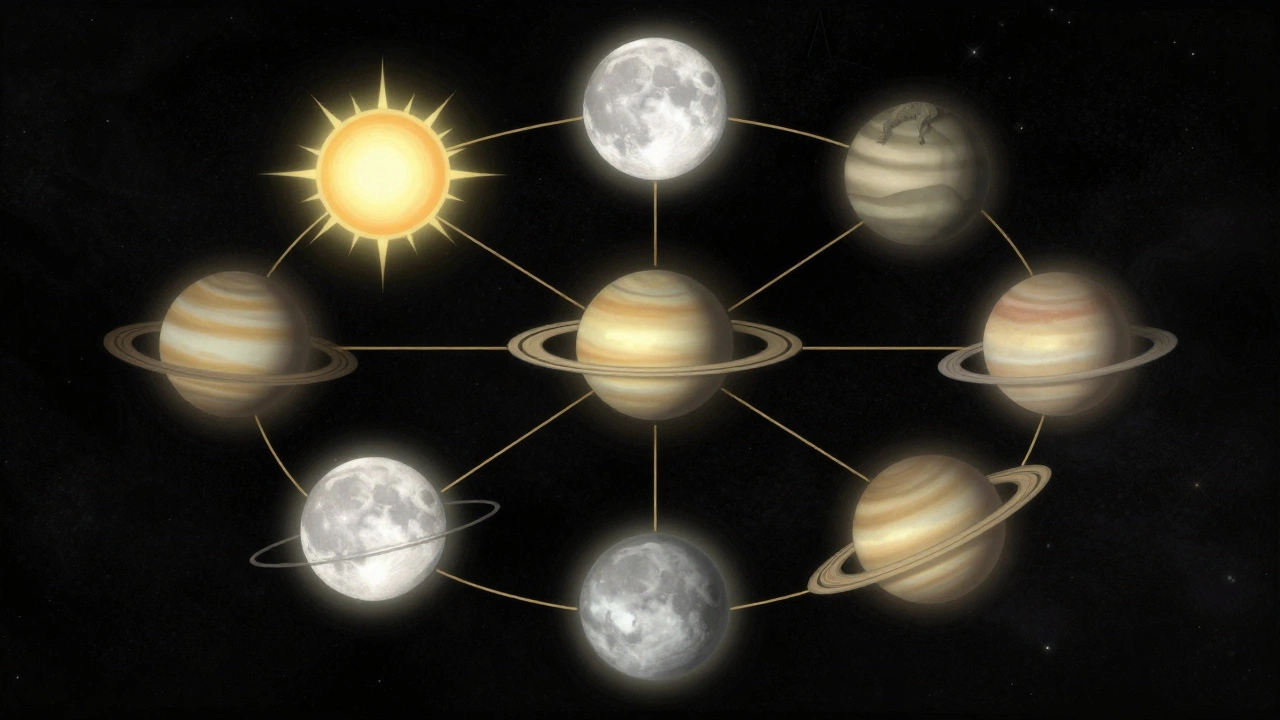
The key to unlocking the names lies in the order of these planets. Ancient astrologers assigned each hour of the day to a planet, following a specific sequence based on the speed at which they appeared to move across the sky (from fastest to slowest): Saturn, Jupiter, Mars, the Sun, Venus, Mercury, and the Moon. If you start a day with the ruling planet of the previous day's last hour, the next day starts with the next planet in line. This creates the exact order we still use today.
Sunday: The Day of the Sun
Sunday is the first day of the week in many cultures, named after the Sun. In Old English, this was Sunnandæg, literally "Sun's day." The Sun was considered the most powerful celestial body, governing life, growth, and visibility. In Germanic tradition, the Sun was often personified as a goddess, Sol.
If you look at other languages, the connection becomes even clearer. In French, it is Dimanche, which comes from Latin dies dominica, meaning "Lord's Day," reflecting Christian influence. But in Spanish (Domingo) and Italian (Domenica), you can still hear the root dominus. However, in German (Sonntag) and Dutch (Zondag), the solar connection remains explicit. When you take a city break on a Sunday, you are participating in a tradition that honors the central star of our solar system.
Monday: The Moon's Influence
Monday is the second day of the week, named after the Moon. Following the Sun, the Moon is the most obvious object in the sky. Old English called it Mōnandæg, or "Moon's day." The Moon governs tides, nights, and cycles of change. In many ancient cultures, the Moon was associated with intuition and mystery.
Again, looking at European languages helps reveal the pattern. German uses Montag, French uses Lundi (from Latin Luna), and Spanish uses Lunes. All of these point directly back to Luna, the Roman goddess of the Moon. While the Germanic tribes kept the direct "Moon" reference, the Romance languages kept the Latin root. This split shows how language evolves while keeping the same astronomical anchor.
Tuesday: The Warrior's Day
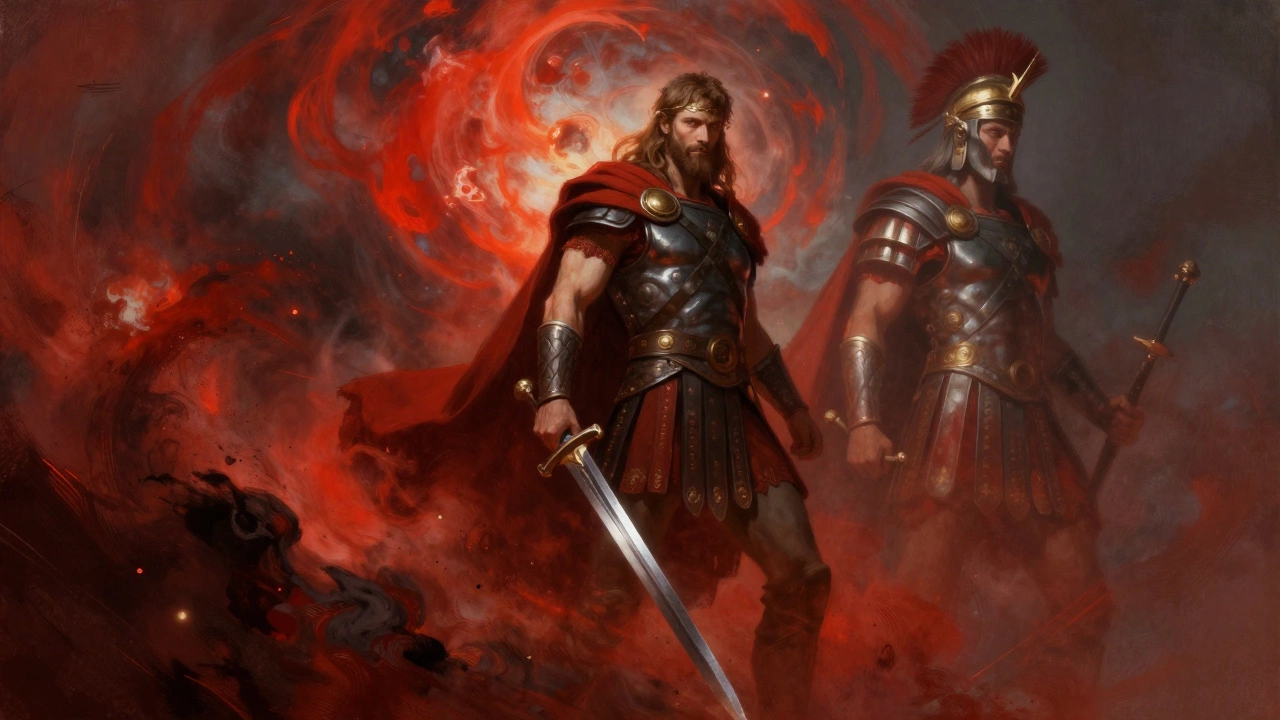
Tuesday is named after the Norse god Tyr, who corresponds to the planet Mars. Here is where things get interesting. In Latin, this day was dies Martis, "Day of Mars," the Roman god of war. Mars is the red planet, easily identifiable by its rusty color. War is bloody; Mars is red. The connection was obvious to Romans.
However, the Germanic peoples did not simply translate "Mars." They substituted him with their own equivalent god of war and justice: Tyr (or Tiw). So, Tuesday is actually "Tiw's Day." If you speak German, you will notice they didn't make this swap. They call it Dienstag, which comes from diēs (day) + martis (Mars), essentially preserving the Roman name. This highlights a cultural divergence: the North kept their gods, while Central Europe kept the Roman names.
Wednesday: The Trickster's Midweek
Wednesday is named after Odin (Woden), corresponding to the planet Mercury. Wednesday is the middle of the work week, and its name reflects a complex deity. In Latin, it was dies Mercurii, "Day of Mercury." Mercury was the messenger god, known for speed, trade, and communication. He wore winged sandals and carried a caduceus.
The Anglo-Saxons equated Mercury with Odin (or Woden), the chief of the Norse gods. Odin was also a god of wisdom, poetry, and magic, and he traveled widely. While Mercury was a swift messenger, Odin was a wanderer seeking knowledge. The link wasn't perfect, but both figures were associated with movement and intellect. Thus, Wednesday became "Woden's Day." In French (Mercredi) and Spanish (Miércoles), the Mercury connection is preserved clearly.
Thursday: Thor's Thunder
Thursday is named after the Norse god Thor, corresponding to the planet Jupiter. Thursday follows Wednesday in the planetary sequence. In Rome, this was dies Jovis, "Day of Jupiter." Jupiter was the king of the gods, ruler of the sky, and wielder of lightning bolts. He represented power, authority, and storms.
The Germanic equivalent of Jupiter was Thor, the hammer-wielding god of thunder. Thor is perhaps the most famous Norse god today, thanks to modern pop culture, but his role in the weekly calendar is ancient. Thursday is literally "Thor's Day." Again, look at the Romance languages: French (Jeudi), Spanish (Jueves), and Italian (Giovedì) all derive from Jupiter. The Germanic languages swapped the Roman king for the Norse thunderer.
Friday: Love and Beauty
Friday is named after the Norse goddess Frigg (or Freya), corresponding to the planet Venus. Friday brings us to Venus, the brightest planet in the sky, often seen as the morning or evening star. In Rome, this was dies Veneris, "Day of Venus." Venus was the goddess of love, beauty, and desire.
The Anglo-Saxons replaced Venus with Frigg, the wife of Odin and goddess of marriage and prophecy. Some scholars argue it might be Freya, another goddess of love and war, but Frigg is the more traditional association in Old English. Either way, the theme of love and fertility remains. Friday is "Frigg's Day." In contrast, French (Vendredi) and Spanish (Viernes) keep the Venus connection intact. This explains why Friday feels like a day of anticipation and release-it’s tied to the planet of love and pleasure.
Saturday: Saturn's Sole Survivor
Saturday is the only day named directly after a Roman god, Saturn. Saturday is the odd one out. Unlike the other days, the Germanic peoples did not replace the Roman god with a Norse counterpart. Saturn was the god of agriculture, time, and wealth. He was also associated with the Sabbath, a day of rest.
Why didn't they swap Saturn? One theory is that there was no clear Norse equivalent for Saturn’s specific combination of agricultural and temporal powers. Another is that the name "Saturn's Day" was so well-established by the time the Germanic tribes adopted the seven-day week that it stuck. In almost every major European language, the name traces back to Saturn: French (Samedi), Spanish (Sábado), Italian (Sabato). Even in Hebrew, it is Shabbat, which shares the root meaning of rest. Saturday is the bridge between the ancient Roman calendar and our modern weekend.
| Day | Planet/God (Roman) | English (Germanic) | French (Romance) | Spanish (Romance) |
|---|---|---|---|---|
| Sunday | Sun | Sun's Day | Dimanche (Lord's Day) | Domingo (Lord's Day) |
| Monday | Moon | Moon's Day | Lundi (Luna) | Lunes (Luna) |
| Tuesday | Mars (War) | Tiw's Day | Mardi (Mars) | Martes (Mars) |
| Wednesday | Mercury (Messenger) | Woden's Day | Mercredi (Mercury) | Miércoles (Mercury) |
| Thursday | Jupiter (King) | Thor's Day | Jeudi (Jupiter) | Jueves (Jupiter) |
| Friday | Venus (Love) | Frigg's Day | Vendredi (Venus) | Viernes (Venus) |
| Saturday | Saturn (Time) | Saturn's Day | Samedi (Saturn) | Sábado (Saturn) |
Why This Matters for Travelers
You might wonder why this history matters when you're booking a flight or planning a museum visit. Understanding the roots of these names adds a layer of depth to your travel experiences. When you walk through the streets of Paris on a Jeudi, you are stepping into a rhythm set by Jupiter. When you explore Tokyo on a Kyōbi (Thursday, named after Jupiter in Japanese too, via Chinese translation), you are part of a global pattern.
Moreover, knowing these origins helps when navigating international calendars. For instance, in many Islamic countries, the weekend falls on Friday and Saturday, honoring the day of prayer (Jumu'ah) and the day of rest. In Israel, the week ends on Saturday (Shabbat). Recognizing that these shifts are rooted in different cultural interpretations of the same seven-day cycle makes you a more aware and respectful traveler.
Next time you check your itinerary, don't just see "Tuesday" as a deadline. See it as a nod to Tyr, the god of justice. Don't just see "Friday" as the end of the work week. See it as a celebration of Frigg and Venus. The days are not arbitrary labels; they are a weekly reminder of the cosmos above us.
Why are there 7 days in a week?
The seven-day week originated with the Babylonians, who observed seven celestial bodies visible to the naked eye: the Sun, the Moon, Mars, Mercury, Jupiter, Venus, and Saturn. They also noted that the lunar cycle (phases of the moon) lasts approximately 28 days, which divides evenly into four weeks of seven days. This system was adopted by the Greeks and Romans and eventually spread globally.
Which day is named after a Norse god instead of a Roman one?
Tuesday, Wednesday, Thursday, and Friday are named after Norse gods in English. Tuesday is named after Tyr (equivalent to Mars), Wednesday after Odin/Woden (equivalent to Mercury), Thursday after Thor (equivalent to Jupiter), and Friday after Frigg/Freya (equivalent to Venus). Saturday is the only day that retains its Roman name (Saturn) in English.
What does 'Wednesday' mean?
Wednesday means "Woden's Day." Woden (or Odin) was the chief god in Norse mythology, associated with wisdom, poetry, and magic. In the Roman calendar, this day was dedicated to Mercury, the messenger god. The Anglo-Saxons equated Odin with Mercury due to their shared associations with travel and intellect.
Why is Saturday named after Saturn?
Saturday is named after Saturn, the Roman god of agriculture, time, and wealth. Unlike the other days, the Germanic peoples did not replace Saturn with a Norse equivalent. It is possible that no direct counterpart existed, or that the name was already too established to change. Saturn was also associated with the Sabbath, a day of rest, which aligns with Saturday's modern role as a weekend day.
Do other languages name the days after planets?
Yes, many languages reflect the planetary origins. For example, in Japanese, the days are named after the seven classical planets (e.g., Nichiyobi for Sunday, "Sun Day"). In Slavic languages, the days are often numbered (e.g., Russian Ponedelnik for Monday, meaning "after Sunday"). Romance languages like French and Spanish mostly retain the Roman god names, while Germanic languages like English and German mix Norse gods and Roman names.
Menu